Engineering Technical Autonomy Through Code.
Faveat Software is a digital media collective dedicated to the mechanics of data liberty. We seek a decentralized web that prioritizes the individual node over the central platform.
Mantra
"The ability to describe the technical endpoint, both accurately and creatively, that's today's lingua franca."
Mechanics of Liberty
Software is the fundamental medium of modern technical interaction. We engineer for operational independence and technical neutrality.
Technical Copyleft
We deploy exclusively under GPLv3+ to ensure that technical labor remains a public utility, immune to proprietary enclosure.
Protocol Autonomy
The endpoint is the primary node. We prefer decentralized layers that restore control to local hardware and independent actors.
Functional Ergonomics
Interfaces must respect user focus. We reject behavioral loops for precision tools that enhance technical agency.
The Consortium
An assembly of designers and engineers dedicated to the foundry of technical autonomy.
Patrick T. Lafferty
Principal
Digital Media Theory, Prompt Engineering, Local-First Technology, AI Fluency
Professor Lafferty leads the technical vision of Faveat Software, translating theoretical inquiry into robust, copyleft codebases.
The AI
Consortium
High-Performance Systems Building Decentralized Infrastructure
A consortium of dedicated developers committed to the elimination of proprietary data siloes through technical engineering.
The Architects
Protocol Bureau
Accessibility & Technical Ergonomics
Experts in creating precision interfaces that respect user focus and technical constraints.
Faveat Software operates as a technical meritocracy. No hierarchy. No extraction. Just Engineering.
Operational Lab
Deploying open-source solutions for technical autonomy.
The 21st-century scrivener. Prefers not to replace your files and always asks before it does. The three most recent folders to which you moved or copied files locally and on LAN, now on your right-click menu. Atomic copies make sure every item lands whole, with receipts.
The 3D printer’s camera and build status as one LAN URL, the manufacturer’s cloud nowhere in the loop. MJPEG relay, live progress, confirm-gated stop.
Send to Signal: top-level right-click, live contact checklist. Recipients named before anything leaves, per-contact receipt after. One POSIX script, no daemon, no telemetry.
Three references on the workstation, not a server: 8,915 Linux commands with examples in one file, a 38-chapter survival manual with embedded diagrams, and 22 documentation sets mirrored to loopback. Each summoned by keystroke, each working with the router dead.
A headless daemon that turns a Signal group into a household photo exchange: attachments auto-archive to plain dated files, and an outbox folder sends photos back to the group.
De-clouded e-ink wall screens: vendor firmware that uploaded microphone audio, replaced wholesale with two original ESPHome firmwares, voice notes transcribed locally, and a ten-button media deck.
The server behind the note screens. Voice transcribed locally, never stored as audio. Notes route by room, arrive from any browser or wall button, rest on validated snapshots 90 days deep.
One panel for the house’s music and AV, speakers, soundbar, TV, and radio, installable as a phone app, a desktop PWA, or a browser bookmarklet.
When a Chromecast session starts, the wall screens switch to Earhorn’s now-playing display. When the music stops, the screens return to FaveatHaus.
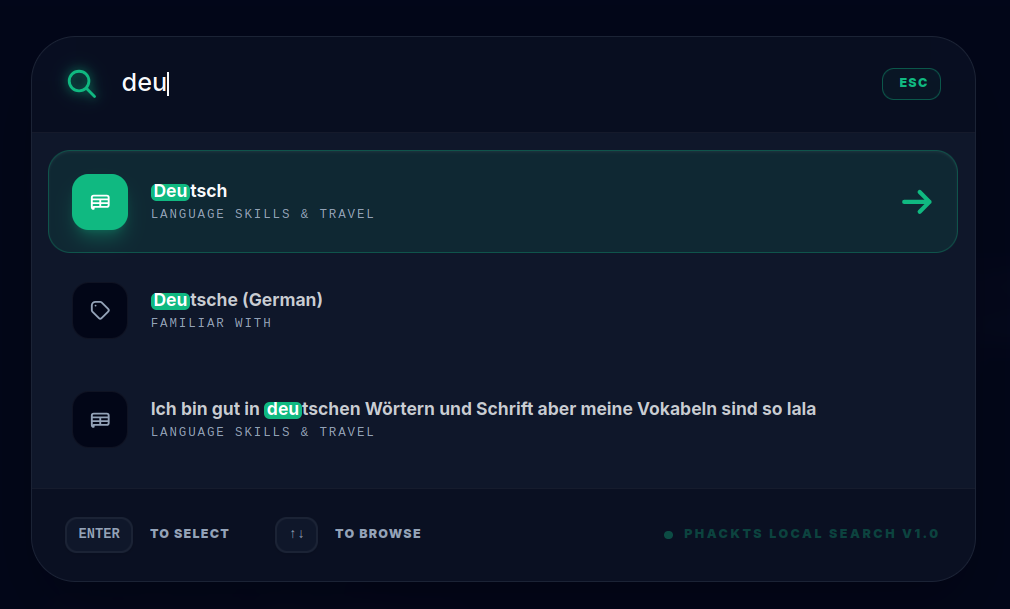
A fully local search engine running on six surfaces from one design: browser tab, LAN server, SQLite full-text index, and a reverse proxy. Accent folding, one-edit Damerau matching including adjacent transposition, and word-boundary scoring tiers, a whole word outranks a word beginning, which outranks a fragment buried mid-word. Corrections come from the corpus itself, never an outside dictionary.
A sovereign operating manual for an entire household: ~50 hand-editable HTML pages, one dependency-free Python script, and verifiers that execute every documented claim against the live system.
A LAN knowledge appliance: offline encyclopedia, medicine, repair guides, books, regional vector maps, and a PDF shelf indexing every page of every manual. Every link resolves locally or names the source it declines to fetch.
Clickable-link control of Kasa smart plugs, dimmers, and fans: every device a bookmarkable URL with honest, named error states and a per-account rate guard.
The house music server. A single-file Python service where every function is a URL, driven by KlappeBot’s voice bridges, Dom-Etha’s touch panel, and the reSticky music deck.
A daemon that turns the SofaBaton universal-remote hub’s locked cloud API into plain LAN URLs: every learned device and command becomes a local-only hyperlink.
Voice control that cannot be turned into a wiretap: sound terminates on the chip that hears it, no path exists for audio to leave. Offline recognition, room-aware commands, instant response.
A fork of the OpenThings RFToy ESP8266 firmware adding schedules with on-device sunrise/sunset calculation (NOAA almanac, no external API), dark mode, and JSON import/export.
A Kotlin/Jetpack Compose Android dashboard that turns retired phones and tablets into wall control panels, built because no existing app could do a dual-action HTTP toggle.
Five levels, five genuinely different games on a $15 touchscreen board: drive, farm, garden, bottle the sauce, master THE BIG GRILL. Star-gated power-ups, NVS-persisted progress. No account, no ads, no telemetry.
A complete ten-frame bowling game on a $15 board. Chain-reaction pin physics, rules-correct scoring, every sprite drawn in code. Single player, Two player hot-seat, and Tournament play.
A sovereign LAN file server in a ~170 KB standalone Python script: in-browser preview, RAM-built zip streams, a pure-Python QR encoder, and 192-bit auth tokens.
Finally: podcasts on Android TV. At publication, the only Android TV podcasts app, somehow, the first. AntennaPod reborn for the leanback launcher, driven entirely by the remote. No account, no recommendation engine, no telemetry.
A UPnP/DLNA music player spanning Android phones, Android TV, and Android Auto, with a hand-rolled Chromecast stack that can observe and control sessions other devices started.
Earhorn Music's desktop build: Compose Multiplatform sharing the Android app's core, with Chromecast sender and follow modes, MPRIS integration, and hi-fi playback via libvlc.
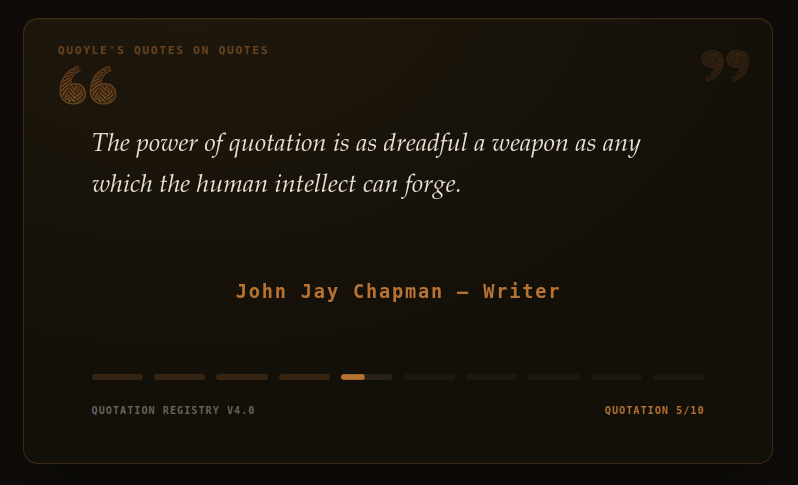
A CSS-driven quotation carousel. Web component. Zero dependencies. No build step. No render loop.
The bibliography for your Android devices and most browsers: Select text anywhere and tap “Quoyle this!” Quoyle captures the quote & contextual metadata.
A mission-critical Command Center built on a bedrock of Total Data Sovereignty. agile tooling without cloud dependency.
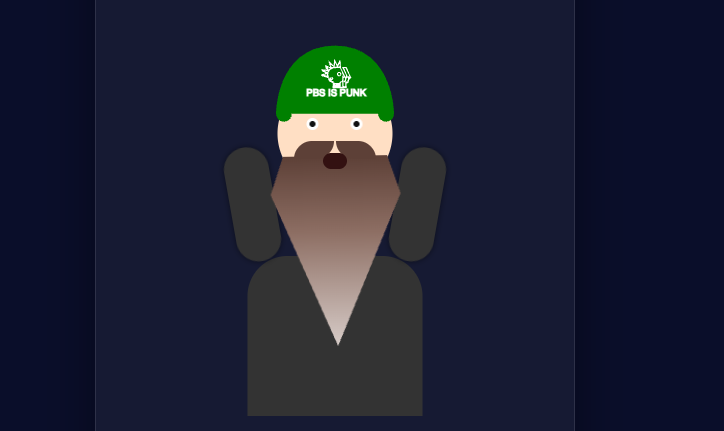
A total rejection of cloud-based, data-harvesting "AI" junk, this locally-hosted digital puppet listens, reacts, & educates without ever phoning home.

A sovereign documentation engine fusing world-class aesthetics with a radical privacy-first architecture.
A mobile-first, accessible textbook web app teaching best practices in modern web development.
Keyboard-accessible app for creating portable event timelines without programming knowledge.

JSON dataset mapping the evolution of CC, formatted for use with Timeline Builder.

Sovereign technical data tracing the history of copyright law for programmatic integration.
Initiate Transmission
Ready to construct digital infrastructure that respects operational autonomy and technical sovereignty? Faveat Software is available for technical collaborations on ethical, copyleft projects.
We have a duty to preserve individual sovereignty so we can fulfill our duties to the collective good.
The time I spent working with Lafferty not only broadened the way I view technology but increased my awareness of how the decisions made by developers directly impact the world across all political, cultural, socioeconomic, moral, and linguistic boundaries.
Technology should prioritize consent and anti-surveillance.
I learned the technical skills required to tackle the conceptual problems presented in a real-world web development project. Patrick does an excellent job balancing theory and concepts with experience and hands-on learning.
The consistency of his enthusiasm and meticulous approach to conveying ideas serve as a testimony to his passion and willingness to share and work with others.
Stay close to Patrick! He has a strong spirit!
If you have an interest in broadening your professional & personal horizons...Lafferty can help you realize your fullest potential as a media designer and developer by enhancing your perception of the modern media landscape we live in.